Leave Your Message
Choosing the best White Nightstand for global buyers requires more than matching a room’s color palette. It involves materials, dimensions, safety, logistics, and long-term performance. Grand View Research valued the global furniture market at approximately USD 516.66 billion in 2022. Its report also forecasts continued growth through 2030, supported by housing demand, online retail, and changing interior preferences. This growth creates wider choice, but it also creates inconsistency between suppliers.
Details matter.
A dependable White Nightstand should offer stable construction, smooth drawer movement, and a finish that resists yellowing, moisture, and everyday scratches. Buyers should examine panel thickness, hardware quality, load capacity, packaging tests, and assembly instructions before comparing prices. The product should also have clear material information, especially when using engineered wood, paint, adhesives, or metal fittings. These details affect indoor comfort and international purchasing confidence. Statista Market Insights identifies furniture e-commerce as a major retail channel, making accurate product photography and verified customer feedback increasingly important. A bright studio image is not enough.
Fit matters.
Global buyers must check actual measurements, drawer clearance, bedside access, plug placement, and delivery dimensions. A compact room may need a narrow model, while a larger bedroom may benefit from deeper storage. Buyers should also review warranty terms, replacement-part availability, and the supplier’s experience with export packaging. Some recommendations remain imperfect because personal style, climate, and budget differ widely. That limitation deserves honest attention. The best choice is not always the most expensive nightstand. It is the one that combines credible specifications, practical storage, responsible sourcing, and reliable service for its intended market.
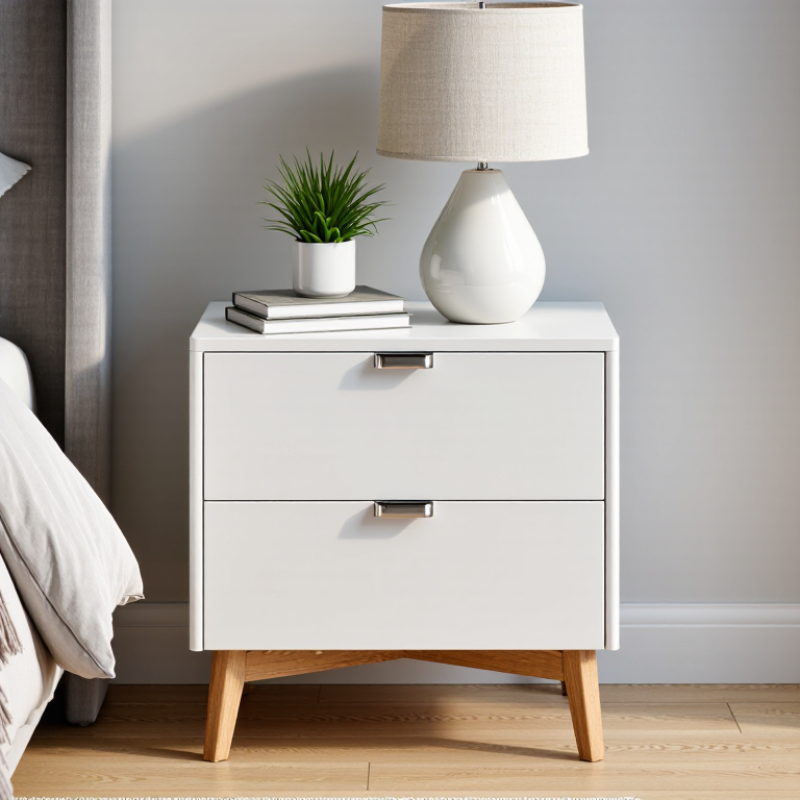
For global buyers, a white nightstand combines visual simplicity with practical bedside storage. At its simplest, it is a compact table beside a bed. Yet its design affects daily comfort, cleaning, and shipping costs. White finishes can make small bedrooms feel brighter. They also reveal dust, fingerprints, and uneven paint more quickly.
Common types include drawer nightstands, cabinet nightstands, open-shelf models, and floating designs. Drawer models protect glasses, books, and chargers from dust. Cabinet styles hide larger items behind a door. Open shelves offer quick access but look untidy when overloaded. Floating nightstands save floor space, although wall strength and installation quality need careful checking. Materials also matter. Solid wood feels warm, engineered wood can control costs, and metal frames may improve stability. Finish quality should be checked under direct light for bubbles, dull patches, or visible edges.
Tips: Measure the bed height first. Choose a similar surface height for easier access. Check the product’s packed dimensions before international shipping. Ask about moisture resistance, load capacity, assembly instructions, and safety testing. White shades can differ between ivory, cream, and cool white. Request a physical sample when possible. A common mistake is choosing appearance over stability. Even careful buyers may overlook drawer clearance or uneven flooring. The best choice is not always the most decorative one.
| Nightstand Type | Typical Construction | Common Width × Depth × Height | Storage Configuration | Main Advantages | Important Limitations | Best For | Global Buyer Considerations |
|---|---|---|---|---|---|---|---|
| Open-Shelf Nightstand | Engineered wood, solid wood, metal, or a combination of materials | 40–55 × 35–45 × 50–65 cm | One or more open shelves; sometimes includes a tabletop drawer | Easy access, visually lightweight, simple to assemble, and usually economical | Items remain visible and collect dust more easily | Minimalist bedrooms, guest rooms, and small apartments | Check shelf load capacity, edge finishing, package protection, and assembly instructions |
| Single-Drawer Nightstand | Painted or laminated engineered wood; solid wood is also common | 40–55 × 35–45 × 50–65 cm | One enclosed drawer, often with an open lower shelf | Balances concealed storage with easy access and a compact footprint | Limited capacity for larger personal items | Most standard bedrooms and buyers seeking an all-purpose design | Verify drawer runner type, internal drawer dimensions, handle strength, and tipping resistance |
| Two-Drawer Nightstand | Engineered wood panels, solid wood, or mixed wood construction | 45–60 × 35–50 × 55–70 cm | Two enclosed drawers, usually full-width | Provides organized bedside storage and keeps surfaces uncluttered | Heavier, deeper, and generally more expensive to ship than open designs | Primary bedrooms and users who need more concealed storage | Compare packed dimensions, net and gross weight, drawer alignment, and shipping damage protection |
| Three-Drawer Nightstand | Painted engineered wood, solid wood, or veneered wood | 45–65 × 35–50 × 60–75 cm | Three stacked drawers | Maximum organization among common bedside cabinet formats | Takes up more vertical space and may look bulky beside a low bed | Large bedrooms, storage-focused users, and rooms without a separate dresser | Measure bed height carefully and confirm anti-tip hardware, drawer stops, and stability on uneven floors |
| Floating Wall-Mounted Nightstand | Engineered wood, plywood, solid wood, or metal mounting components | 35–55 × 25–40 × 20–35 cm | Open compartment, drawer, or compact cabinet | Saves floor space, simplifies cleaning, and offers adjustable installation height | Requires suitable wall structure and secure installation | Small rooms, modern interiors, and accessible cleaning layouts | Confirm wall-fixing method, maximum load, hardware compatibility, and installation requirements in the destination country |
| Mirrored or Gloss-Finish Nightstand | Laminated or painted engineered wood, glass or mirror panels, and metal fittings | 40–60 × 35–50 × 55–70 cm | One to three drawers or a cabinet compartment | Reflects light and creates a decorative, upscale appearance | Shows fingerprints, scratches, and dust; fragile surfaces need careful packaging | Glamorous, contemporary, and light-enhancing bedroom designs | Ask about tempered glass where applicable, protective film, corner protection, and breakage claims procedures |
| Rattan- or Cane-Front Nightstand | Wood or engineered wood frame with natural or synthetic woven panels | 40–60 × 35–50 × 55–70 cm | Usually one or two cabinet doors, sometimes with a drawer | Adds texture, ventilation, and a natural accent to white furniture | Woven surfaces may be more difficult to clean and can vary in pattern | Coastal, Scandinavian, bohemian, and warm contemporary interiors | Check moisture resistance, weave consistency, odor after unpacking, and care instructions |
| White Metal Nightstand | Powder-coated steel or aluminum, sometimes combined with glass or wood | 35–55 × 30–45 × 50–70 cm | Open shelf, wire basket, drawer, or compact locker-style cabinet | Durable, easy to wipe clean, and suitable for industrial or modern spaces | Can feel colder visually and may transmit sound when items are placed on it | Dormitories, modern apartments, offices, and high-use rooms | Review coating corrosion resistance, weld quality, floor protectors, and regional safety requirements |